The phrase “safe and sound” evokes feelings of happiness, security, and peace.
About S²Cities

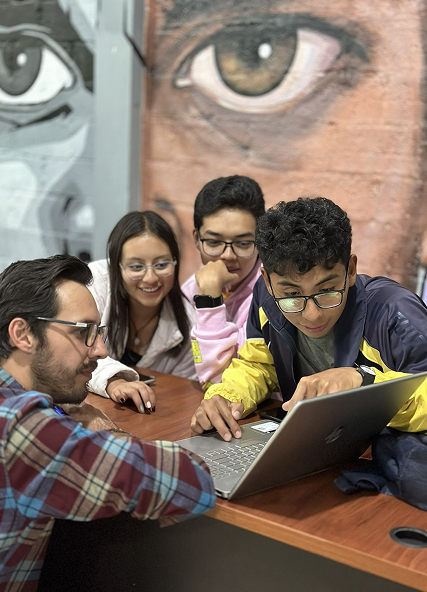
As cities grow and transform, young people are shaping more of the urban world than ever before. By 2030, 60% of the world’s urban population will be under 18—a powerful reminder that cities must be inclusive, safe, and responsive to the health, well-being, and aspirations of their young residents.
This becomes possible only when young people have the spaces, platforms, and support to make their voices heard—and to influence the environments they move through every day.
S²Cities was created with this purpose at its core. The Global Infrastructure Basel Foundation (GIB) launched this global programme to empower young people aged 15 - 24 years to shape safer, more inclusive cities of their own.
This becomes possible only when young people have the spaces, platforms, and support to make their voices heard—and to influence the environments they move through every day.
S²Cities was created with this purpose at its core. The Global Infrastructure Basel Foundation (GIB) launched this global programme to empower young people aged 15 - 24 years to shape safer, more inclusive cities of their own.
How We are Building Safe and Sound Cities — Together with Young People!
2021
- GIB and Fondation Botnar co-envision the S²Cities programme, rooted in the relational well-being approach.
- Programme name is selected via an international competition with young people, coining the name Safe and Sound Cities — ‘S²Cities’.
- Envigado (Colombia) and Bandung (Indonesia) join the programme as pilot cities.
2022
- Global partners join S²Cities, bringing strategic guidance, technical expertise, and support across communications, monitoring and evaluation, and placemaking.
- Local implementation begins in pilot cities. Both cities implement the programme’s Theory of Change in their local context—building systems understanding, strengthening the capacity of key actors, and activating the innovation engine—resulting in the selection of the first 8 youth initiatives for funding and implementation in Envigado and Bandung.
2023
- S²Cities expands to Baguio and Naga (the Philippines) and Cuenca and Ambato (Ecuador). Innovation cycles in the new cities, along with a second cycle in the pilot cities, bring the total to 28 youth-led initiatives improving local safety.
- Research partners join S²Cities to strengthen evidence and learning on youth safety.
- Programme hosts its first Global Convening in Virtual Reality, launching the S2Cities Global Learning Network, bringing together young people, partners, and city actors to exchange lessons and best practices.
2024
- S²Cities publishes a policy brief sharing key programme learnings and insights.
- GIB, the global managing partner for S²Cities, becomes a member of the Cities4Children Alliance; S2Cities features in the Alliance’s knowledge products.
- S²Cities is renewed for a second phase of five years.
- GIB joins the World Economic Forum’s Baukultur Alliance; S²Cities features in their Innovative Practice, Volume 1.
- S²Cities empowers young people to speak on global stages and contribute to the urban safety discourse by convening a delegation of youth and partner representatives at WUF in Egypt.
2025
- Programme expands to Cartagena (Colombia). Innovation cycle in Cartagena, along with second innovation cycle in the Philippines and Ecuador, adds 9 new youth-led initiatives improving local safety.
- Programme expands to Basel (Switzerland) with the support of the LGBTI Youth Fund.
- First regional roundtable convenes in Envigado, further expanding the S²Cities Global Learning Network (GLN).
- S²Cities special research issue published in the Journal of Public Space.
- Hive Vibe, the S²Cities global youth-led communications task force, produces a micro-documentary.
2026
- Second regional roundtable convenes in Baguio, uniting representatives from nine Philippine and Indonesian cities.
- GIB joins the Global Public Space Network.
- The programme expands to two new cities in Ghana.
- S²Cities participates in the World Urban Forum in Azerbaijan.
- Second Virtual Global Convening takes place.
Pathways to Systems Change
Pathways to Systems Change
Pathways to Systems Change
Pathways to Systems Change
Pathways to Systems Change
Pathways to Systems Change
Pathways to Systems Change
Pathways to Systems Change
Pathways to Systems Change
The programme embeds itself within cities and their decision-making and operational ecosystems. Together with governments, young people and partners, the programme advances six key preconditions for system change:
These preconditions stem from the programme’s Theory of Change. Read more here.
Click on the icons to know more about them.
These preconditions stem from the programme’s Theory of Change. Read more here.
Programme Implementation Approach
S²Cities is an open and iterative programme based on a cyclical process of understanding systems, strengthening capacities, ideating and implementing solutions, and scaling systems change.
A core aspect of the programme is establishing formal partnerships with local governments, securing commitments to support data collection, co-design processes, and allocating municipal budgets towards youth issues and establishing a youth innovation hub. This process guides implementation activities and ensures continuity and collaboration across all cities.

Step 1
Understanding Systems

Step 2
Strengthening Capacities

Step 3
Catalysing Innovation

Step 4
Enabling Implementation

Step 5
Scaling Systems
Step 1
Understanding Systems
Reveals tactical triggers for change
Looking at safety from young people’s perspective
Examining the interrelations of safety issues which affect young people
Analysing the root causes of safety issues
Step 2
Strengthening Capacities
Fosters long-term sustainable change
Connecting actors and building networks
Creating inclusive structures for decision-making
Developing capacities of youth and public and private sector actors to sustain change
Step 3
Catalysing Innovation
Challenges the status quo
Applying design thinking methodology
Framing new mindsets to tackle complex safety issues
Harnessing young people’s creativity to solve local challenges
Step 4
Enabling Implementation
Supports funding & partnerships
Launching initiatives and securing implementation partners
Developing plans with youth and gaining stakeholder support
Boosting fundraising and ongoing support for one year
Step 5
Scaling Systems
Generates widespread change
Adapting and improving methods to fit local contexts
Scaling the learnings to other cities
Changing the system on a personal, societal, and environmental level
Safer cities created for and with young people.
While aligning with these larger goals, local implementation partners design their own methodology for implementing activities according to the local context and the city’s needs and priorities. Youth engagement is central to all stages of the programme.
Our Partners
The S²Cities Global Programme Team is a collaborative of organisations leveraging their individual knowledge and expertise to create safer cities for young people.
Global Partners

Programme manager and intermediary organization

Global monitoring, evaluation and learning partner

Global communication partner

Strategic placemaking advisor
Local Partners

Youth engagement and capacity strengthening partner
Envigado & Cartagena, Colombia
Youth engagement and capacity strengthening partner
Basel, Switzerland

Youth engagement and capacity strengthening partner
Ambato & Cuenca, Ecuador

Youth engagement and capacity strengthening partner
Baguio, The Philippines

Youth engagement and capacity strengthening partner
Naga, The Philippines

Local implementation support partner
Bandung, Indonesia
Funding Partners

Primary donor

Primary donor for implementation in Basel, Switzerland
Grant Managing Partners

Grant manager and administrative partner

Principles Shaping Our Programme